Hardware Enablement Stacks
And why should I care? А зачем мне об этом беспокоиться?
Starting Aug 8, 2014 systems running 12.04.2 HWE, 12.04.3 HWE, or 12.04.4 HWE will no longer receive software updates for the kernel and, if you're running it, the graphics stack.
Начиная с 8 августа 2014 системы с 12.04.2 HWE, 12.04.3 HWE или 12.04.4 HWE больше не будут получать обновлений для ядра и, если он у вас используется, графического стека.
How do I know if I'm affected? Как узнать, что меня это касается?
You can: Вы можете:
Tool Утилита
The tool is called 'hwe-support-status ' and it will be available first in the -proposed and then in the -updates repositories:
Утилита называется 'hwe-support-status ' и становится доступна сначала в репозиториях -proposed, а затем в -updates:
It will become available in package 'update-manager-core '.
Она будет доступна в пакете 'update-manager-core '.
Get it from Launchpad if you want it earlier:
Если она понадобится вам раньше, можете получить её с Launchpad:
Notes on this tool:
Примечания по работе с этой утилитой:
Packages
Check your running kernel version:
Проверьте версию вашего ядра:
This method does not check for a graphics stack HWE. However, you cannot get a HWE graphics stack without a corresponding HWE kernel unless you've done things manually. Note that such a combination (HWE graphics with non-HWE kernel) is not supported.
What to do if I'm affected?
You have three options:
У вас есть три варианта:
1. Install 12.04.5 HWE (Trusty kernel/graphics)
The hwe-support-status tool will tell you what you need to do.
Инструмент hwe-support-status сообщит вам, что нужно делать.
2. Upgrade to 14.04 LTS
The hwe-support-status tool will tell you what you need to do.
Инструмент hwe-support-status сообщит вам, что нужно делать.
If you want to upgrade a desktop system to 14.04 before July 16, 2014 (the date at which all necessary software components are in the regular -updates repository) you will need to invoke update-manager from the command line:
Если вы хотите обновить систему для настольных компьютеров до 14.04 раньше 16 июля 2014 г. (в этот день все необходимые программные компоненты попадают в стандартные репозитории -updates), вам понадобится запустить update-manager из командной строки:
For both servers and desktops it's strongly recommended to ensure a system is in a good state before upgrading. Here are some tips:
И для серверов, и для ПК настоятельно рекомендуется убедиться перед обновлением, что система находится в хорошем состоянии. Вот некоторые советы:
3. Fresh install of 14.04 LTS "Чистая" установка 14.04 LTS
Redeploy with a fresh copy of Ubuntu 14.04 LTS .
Установите на компьютер свежую копию Ubuntu 14.04 LTS .
FAQ Вопросы и ответы
Not true. Such a system will only stop receiving updates for the kernel and the graphics stack. The rest of the software will continue to get updates. Это не так. Такая система лишь перестанет получать обновления для ядра и графического стека. Остальное ПО по-прежнему будет обновляться.
Not true. 12.04.3 is not 12.04.3 HWE. And since HWE (and thus a new kernel series) cannot be introduced through regular package updates it is possible to update a non-HWE system to arrive at a later point release, such as 12.04.3, and still preserve the EOL date of April 2017. Неверно. 12.04.3 — это не 12.04.3 HWE. And since HWE (and thus a new kernel series) cannot be introduced through regular package updates it is possible to update a non-HWE system to arrive at a later point release, such as 12.04.3, and still preserve the EOL date of April 2017.
What is hardware enablement (HWE)?
I see the linux-hwe-generic package as part of the kernels you can install in Ubuntu.
What is hardware enablement (HWE)?
2 Answers 2
Brand new hardware devices are released to the public always more frequently. And we want such hardware to be always working on Ubuntu, even if it has been released after an Ubuntu release. Six months (the time it takes for a new Ubuntu release to be made) is a very long period in the IT field. Hardware Enablement (HWE) is about that: catching up with the newest hardware technologies.
Now, how does Ubuntu want to reach the goal of Hardware Enablement? Using rolling releases for the kernel: as soon as a new kernel is released, it is packaged for Ubuntu, tested (via the proposed pocket and special Q/A methodologies), and made available to Ubuntu users. This method has of course some disadvantages: releasing a new kernel too quickly may introduce some bugs and issues, and may not be suitable for the enterprise.
The solution? Offering different kernels for different users. Therefore Ubuntu will offer at least two kernels: the General Availability (GA) kernel, i.e. the most stable kernel, which does not get updated to point releases; and the Hardware Enablement (HWE) kernel, i.e. the most recent kernel released. This is why you are seeing both the linux-generic and the linux-generic-hwe packages.
Finally, if you are interested in developing or testing the newest kernel technologies, look at the Ubuntu Hardware Debugging web site.
Что такое аппаратное обеспечение (HWE)?
Я вижу пакет linux-hwe-generic как часть ядер, которые вы можете установить в Ubuntu.
Что такое аппаратное обеспечение (HWE)?
Совершенно новые аппаратные устройства выпускаются для публики всегда чаще. И мы хотим, чтобы такое оборудование всегда работало в Ubuntu, даже если оно было выпущено после выпуска Ubuntu. Шесть месяцев (время, необходимое для выпуска новой версии Ubuntu) — это очень долгий период в области ИТ. Аппаратное обеспечение (HWE) — вот что: догонять новейшие аппаратные технологии.
Теперь, как Ubuntu хочет достичь цели аппаратного обеспечения? Использование скользящих выпусков для ядра: как только новое ядро выпущено, оно упаковывается для Ubuntu, тестируется (с помощью предлагаемых карманных и специальных методологий Q / A) и предоставляется пользователям Ubuntu. Этот метод имеет, конечно, некоторые недостатки: слишком быстрое освобождение нового ядра может привести к ошибкам и проблемам и может не подойти для предприятия.
Решение? Предлагая разные ядра для разных пользователей. Поэтому Ubuntu будет предлагать как минимум два ядра: ядро General Availability (GA), то есть самое стабильное ядро, которое не обновляется до точечных выпусков; и ядро аппаратного обеспечения (HWE), то есть самое последнее выпущенное ядро. Вот почему вы видите linux-generic и linux-hwe-generic пакеты и.
Наконец, если вы заинтересованы в разработке или тестировании новейших технологий ядра, загляните на веб-сайт Ubuntu Hardware Debugging .
How To Install The Ubuntu 18.04.4 LTS Hardware Enablement Stack (HWE)
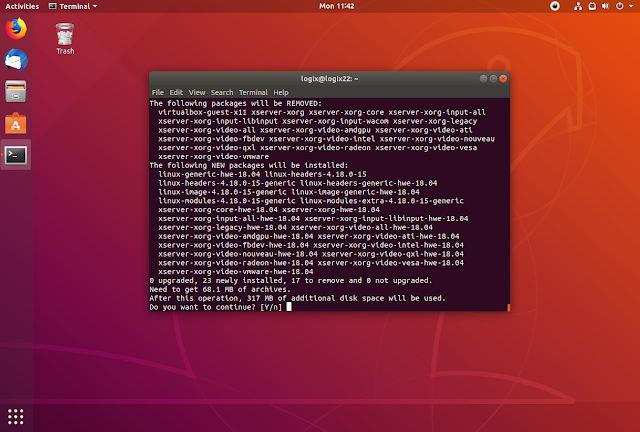
Ubuntu 18.04.2 LTS was released on Friday for Desktop, Server and Cloud. This point release includes application updates, bug fixes, and a new hardware enablement stack.
[[Edit]] Ubuntu 18.04.4 is out, and with it an updated Hardware Enablement Stack.
Let me quickly explain what «point release» and «hardware enablement stack» mean. An Ubuntu LTS (Long Term Support) point release contains bug fixes and package updates since the initial release, as well as support for newer hardware through a hardware enablement stack. A LTS hardware enablement stack (HWE) provides newer kernel and X for an existing Ubuntu LTS release.
In the first hardware enablement stack (18.04.2) for Ubuntu 18.04, the kernel and X are backported from Ubuntu 18.10. In the second HWE, released in August 2019 (18.04.3), the kernel and X packages will be backported from Ubuntu 19.04. For the Ubuntu 18.04.4 hardware enablement stack, the kernel and X packages are backported from Ubuntu 19.10. You can view an Ubuntu 18.04.x kernel support schedule here.
If you’re already using Ubuntu 18.04 with all available updates installed, you already have the fixes and package updates from the Ubuntu 18.04.4 release, but not the Ubuntu 18.04.4 LTS hardware enablement stack.
If you want to use the LTS hardware enablement stack on Ubuntu 18.04 desktop, you can install it using (this always install the latest HWE, version 18.04.4 right now):
On Ubuntu 18.04 server only install the hardware enablement stack kernel package (this always install the latest HWE, version 18.04.4 right now):
Reboot your system after the installation is completed.
[[Edit: The latest HWE for Ubuntu 18.04 is 18.04.4]] This installs a newer kernel (it installs Linux 5.3; the first iteration of Ubuntu 18.04 used Linux 4.15) and X (it installs version 1.20.5+git; initially Ubuntu 18.04 used version 1.19.6).
If you’ve installed a previous (not the latest version) HWE, like the Ubuntu 18.04.3 hardware enablement stack, you’ll receive an update (like for any other package) for the latest Ubuntu 18.04.4 HWE. That’s because the hardware enablement stack packages are called the same for every Ubuntu 18.04 point release (.2, .3, or .4). So there’s no need to install any extra packages to get the latest hardware enablement stack if you’ve installed these packages previously, you just have to install all available system updates.
If you want to check the date until your system is supported by Canonical, and see if you have a hardware enablement stack installed, you can use this command:
This is output of the hwe-support-status —verbose command in Ubuntu 18.04, without and with the LTS hardware enablement stack installed: