What is Calculus? Definition, Applications, and Concepts
Calculus — often referenced in hushed tones with a twinge of fear, or alongside a sharp inhale and a chill down your spine. (Are we wrong?) Well, we’re here to tell you that it doesn’t have to be that way!
If you don’t feel ready for it, calculus can be a little overwhelming at the start, and that’s totally normal. The good news? We can help you set yourself up for success in calculus and beyond.
Let’s get into it!
What is calculus?
In simplest terms, calculus is a branch of mathematics that deals with rates of change. For example: maybe you want to calculate the change in velocity of a car rolling to a stop at a red light. Calculus can help you figure out that change.
That’s right: calculus puts movement into math!
When you think about everything you’ve learned up to this point — basic arithmetic, fractions, quadratic equations — you’ll realize that all of it is static. There’s no motion implied in the arithmetic or algebra branches of math.
Calculus, on the other hand, uses derivatives and integrals to explore known and unknown rates of change. So really, when you’re learning calculus, you’re learning some pretty trailblazing stuff!
Doesn’t that make it just a little bit cooler?
The definition of calculus
If you still need a more formal definition of calculus, here’s ours:
Calculus is a branch of mathematics that studies continuous change; deals with properties of derivatives and integrals using methods based on the summation of infinitesimal differences
Intro to calculus: How to prepare
Much like life, calculus is all about dealing with changes.
So, as you’re introduced to calculus, keep these things in mind:
- This is not static math
- You can lean on your algebra skills to help
- Getting comfortable with the vocabulary is key (more on that later!)
- It’s okay to be confused! Working through it is part of learning.
And, of course, be sure to keep your Photomath app nearby if you need a deep dive on a particular problem!
What is calculus used for?
Calculus is used to model many different processes in real-life applications requiring non-static quantities.
Throughout your math journey, you’ll use calculus to:
- Find a derivative
- Evaluate the limit of a function
- Explore variables that are constantly changing
- Employ integration in solving geometric problems
- Solve differential equations
And that’s just the beginning!
Real-world calculus applications
When you’re sitting in class with derivatives scrawled across the board, it’s natural to wonder when you’ll ever see this again. From finding areas and volumes of curved shapes and solids to the tension of the wires holding the Golden Gate Bridge, calculus is all around you!
Here are a few more glimpses of calculus in the wild:
| Economics | • Estimating price flexibility relative to demand • Predicting profits and losses |
| Astronomy | • Tracking orbits and movements • Charting detailed space missions and probes |
| Music | • Predicting patterns to strengthen audio engineering • Optimizing acoustics |
| Gaming | • 3D rendering and lighting design of environments • Developing seamless infrastructure for gameplay |
| Home improvement | • Mapping electricity and calculating cable lengths • Adjusting heating and air conditioning |
Types of calculus
Just like mathematics as a field, calculus can be broken down into different branches or sub-fields. Let’s take a look at each so you can explore the greater context of the world of calculus.
Basic calculus
Everybody has to start somewhere! Maybe your course is called Basic Calculus, or perhaps it even overlaps with Precalculus — but either way, this fundamental level is about learning functions, inverse functions, rational functions, and complex numbers.
Differential calculus
A subfield of calculus, differential calculus helps you find the slope of curves and the rate at which quantities change. This is where you’ll dive into limits, derivatives, functions, and parametric equations.
Integral and differential calculus
Differential calculus joins with integral calculus to form the two main sub-branches of calculus as a mathematical field.
While differential calculus deals mainly with derivatives, integral calculus is used to find the area near a curve, either above or below. To accomplish this, you’ll learn about integrals, differential equations, and series.
Infinitesimal calculus
Calculus as a whole was originally called “infinitesimal calculus” or “calculus of infinitesimals,” so this really just refers to calculus in general!
ICYMI: “Infinitesimal” on its own refers to values that are very close to zero (closer than any regular real number), but not actually zero.
Key calculus terms
In getting an idea of what to expect, you may have seen some unfamiliar words pop up along the way — and the (perhaps unsettling) truth is that higher-level math usually means higher-level vocabulary.
That might seem daunting, but it shouldn’t be! At least, not when you have a handy list like this:
| Term | Description |
|---|---|
| Derivative | The instantaneous rate of change of a function with respect to a change of a variable |
| Differentiation | The process of finding the derivative |
| Function | An expression that illustrates the relationship between an independent variable and a dependent variable |
| Integral | An expression that illustrates the relationship between an independent variable and a dependent variable |
| Integration | The process of finding the integral, which is the inverse process of finding the derivative |
Even the most detailed explanation won’t help if you don’t understand the terms being used, so keep this list in your back pocket if you ever get confused (and don’t worry, we also explain these definitions as you go in the app!).
Important calculus concepts
All those new terms come together to form the conceptual backbone of calculus.
Depending on your class and trajectory, certain concepts will be a greater focus than others. Functions and derivatives will likely be most important in the beginning, and you’ll spend more time on integrals and other advanced topics as you progress.
Solving calculus problems and equations
You’ve seen alphabetical variables introduced in algebra, but calculus problems look even more… different.
But what’s our #1 rule for tackling calculus?
Don’t let it scare you!
Whether it’s a problem with limits or a tricky differential equation, we can spend more time stressing than we do solving, and that’s not a fun or efficient use of our evenings. Instead, take a deep breath and remember that you are totally capable of learning new things.
We’ll walk through some tips and basics here, but don’t forget that you can always use your Photomath app to scan whatever problem is in front of you. We’re here 24/7, all year long!
Calculus formulas
To manipulate calculus problems to their fullest extent, you’ll often need to employ certain formulas.
Тригонометрические функции. Значение тригонометрических функций.
Тригонометрические функции — это периодические функции с периодами  для sin, cos, sec и cosec, и
 для tg и ctg.
Зачастую тригонометрические функции обозначают отношением сторон прямоугольного треугольника либо длины конкретных отрезков в единичной окружности.
Прямые тригонометрические функции.
Производные тригонометрические функции.
Другие тригонометрические функции.
В современном мире есть 6 базовых тригонометрических функций, которые ниже в таблице указаны вместе с уравнениями, которые связывают их.
Функция
Соотношение


Знаки тригонометрических функций .
Значения тригонометрических функций.
Значения sin, cos, tg, ctg, sec и cosec для определенных углов указаны в таблице. («∞» обозначает, что функция в данной точке не определена, а в её окрестности стремится к бесконечности).
0°
30°
π/6
45°
π/4
60°
π/3
90°
π/2
180°
270°
3π/2
360°
2π


Ясно, что значения тригонометрических функций не зависят от величины радиуса окружности R в силу свойств подобных фигур. Часто этот радиус принимают равным величине единичного отрезка, тогда синус равен просто ординате yB, а косинус — абсциссе xB. На рисунке 3 показаны величины тригонометрических функций для единичной окружности.
Если α — действительное число, то синусом α в математическом анализе называется синус угла, радианная мера которого равна α, аналогично для прочих тригонометрических функций.
Определение тригонометрических функций для острых углов
Во многих учебниках элементарной геометрии до настоящего времени тригонометрические функции острого угла определяются как отношения сторон прямоугольного треугольника. Пусть OAB — треугольник с углом α. Тогда:
- Синусом α называется отношение AB/OB (противолежащего катета к гипотенузе)
- Косинусом α называется отношение ОА/OB (прилежащего катета к гипотенузе)
- Тангенсом α называется отношение AB/OA (отношение противолежащего катета к прилежащему)
- Котангенсом α называется отношение ОА/AB (отношение прилежащего катета к противолежащему)
- Секансом α называется отношение ОB/OA (гипотенузы к прилежащему катету)
- Косекансом α называется отношение ОB/AB (гипотенузы к противолежащему катету)
Построив систему координат с началом в точке O, направлением оси абсцисс вдоль OA и в случае необходимости изменив ориентацию (перевернув) треугольник так, чтобы он находился в первой четверти системы координат, и затем, построив окружность с радиусом, равным гипотенузе, сразу находим, что такое определение функций приводит к тому же результату, что и предыдущее. Данное определение имеет некоторое педагогическое преимущество, так как не требует введения понятия системы координат, но также и такой крупный недостаток, что невозможно определить тригонометрические функции даже для тупых углов, которые необходимо знать при решении элементарных задач про тупоугольные треугольники (см. Теорема синусов, Теорема косинусов).
Определение тригонометрических функций как решений дифференциальных уравнений
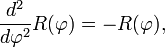
Функции косинус и синус можно определить как чётное (косинус) и нечётное (синус) решение дифференциального уравнения

Определение тригонометрических функций как решений функциональных уравнений
Функции косинус и синус можно определить как непрерывные решения (f и g соответственно) системы функциональных уравнений: 


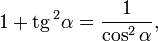
Деля это уравнение на квадрат косинуса и синуса соответственно имеем далее:






Однопараметрическое представление
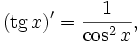
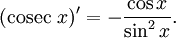
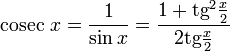
Все тригонометрические функции можно выразить через тангенс половинного угла.




Ясно, что значения тригонометрических функций не зависят от величины радиуса окружности R в силу свойств подобных фигур. Часто этот радиус принимают равным величине единичного отрезка, тогда синус равен просто ординате yB, а косинус — абсциссе xB. На рисунке 3 показаны величины тригонометрических функций для единичной окружности.
Если α — действительное число, то синусом α в математическом анализе называется синус угла, радианная мера которого равна α, аналогично для прочих тригонометрических функций.
Определение тригонометрических функций для острых углов
Во многих учебниках элементарной геометрии до настоящего времени тригонометрические функции острого угла определяются как отношения сторон прямоугольного треугольника. Пусть OAB — треугольник с углом α. Тогда:
- Синусом α называется отношение AB/OB (противолежащего катета к гипотенузе)
- Косинусом α называется отношение ОА/OB (прилежащего катета к гипотенузе)
- Тангенсом α называется отношение AB/OA (отношение противолежащего катета к прилежащему)
- Котангенсом α называется отношение ОА/AB (отношение прилежащего катета к противолежащему)
- Секансом α называется отношение ОB/OA (гипотенузы к прилежащему катету)
- Косекансом α называется отношение ОB/AB (гипотенузы к противолежащему катету)
Построив систему координат с началом в точке O, направлением оси абсцисс вдоль OA и в случае необходимости изменив ориентацию (перевернув) треугольник так, чтобы он находился в первой четверти системы координат, и затем, построив окружность с радиусом, равным гипотенузе, сразу находим, что такое определение функций приводит к тому же результату, что и предыдущее. Данное определение имеет некоторое педагогическое преимущество, так как не требует введения понятия системы координат, но также и такой крупный недостаток, что невозможно определить тригонометрические функции даже для тупых углов, которые необходимо знать при решении элементарных задач про тупоугольные треугольники (см. Теорема синусов, Теорема косинусов).
Определение тригонометрических функций как решений дифференциальных уравнений
Функции косинус и синус можно определить как чётное (косинус) и нечётное (синус) решение дифференциального уравнения
Определение тригонометрических функций как решений функциональных уравнений
Функции косинус и синус можно определить как непрерывные решения (f и g соответственно) системы функциональных уравнений:
Значения тригонометрических функций для некоторых углов
Значения синуса, косинуса, тангенса, котангенса, секанса и косеканса для некоторых углов приведены в таблице.
Деля это уравнение на квадрат косинуса и синуса соответственно имеем далее:
Формулы сложения

Однопараметрическое представление
Все тригонометрические функции можно выразить через тангенс половинного угла.
x\, dx=\ln \Big|\operatorname
История
Линия синуса у индийских математиков первоначально называлась «арха-джива» («полутетива»), затем слово «арха» было отброшено и линию синуса стали называть просто «джива». Арабские переводчики не перевели слово «джива» арабским словом «ватар», обозначающим тетиву и хорду, а транскрибировали арабскими буквами и стали называть линию синуса «джиба». Так как в арабском языке краткие гласные не обозначаются, а долгое «и» в слове «джиба» обозначается так же, как полугласная «й», арабы стали произносить название линии синуса «джайб», что буквально обозначает «впадина», «пазуха». При переводе арабских сочинений на латынь европейские переводчики перевели слово «джайб» латинским словом sinus, имеющим то же значение.
Современное обозначение синуса sin и косинуса cos введено Леонардом Эйлером в XVIII веке.
Термины «тангенс» (от лат. tangens — касающийся) и «секанс» (лат. secans — секущий) были введены датским математиком Томасом Финке (1561—1656) в его книге «Геометрия круглого» (Geometria rotundi, 1583)
Тригонометрические функции. Значение тригонометрических функций.
Тригонометрические функции — это периодические функции с периодами для sin, cos, sec и cosec, и для tg и ctg.
Зачастую тригонометрические функции обозначают отношением сторон прямоугольного треугольника либо длины конкретных отрезков в единичной окружности.
Прямые тригонометрические функции.
Производные тригонометрические функции.
Другие тригонометрические функции.
В современном мире есть 6 базовых тригонометрических функций, которые ниже в таблице указаны вместе с уравнениями, которые связывают их.
Функция
Соотношение
Знаки тригонометрических функций .
Значения тригонометрических функций.
Значения sin, cos, tg, ctg, sec и cosec для определенных углов указаны в таблице. («∞» обозначает, что функция в данной точке не определена, а в её окрестности стремится к бесконечности).
0°
30°
π/6
45°
π/4
60°
π/3
90°
π/2
180°
270°
3π/2
360°
2π
Calculus, on the other hand, uses derivatives and integrals to explore known and unknown rates of change. So really, when you’re learning calculus, you’re learning some pretty trailblazing stuff!
Doesn’t that make it just a little bit cooler?
The definition of calculus
If you still need a more formal definition of calculus, here’s ours:
Calculus is a branch of mathematics that studies continuous change; deals with properties of derivatives and integrals using methods based on the summation of infinitesimal differences
Intro to calculus: How to prepare
Much like life, calculus is all about dealing with changes.
So, as you’re introduced to calculus, keep these things in mind:
- This is not static math
- You can lean on your algebra skills to help
- Getting comfortable with the vocabulary is key (more on that later!)
- It’s okay to be confused! Working through it is part of learning.
And, of course, be sure to keep your Photomath app nearby if you need a deep dive on a particular problem!
What is calculus used for?
Calculus is used to model many different processes in real-life applications requiring non-static quantities.
Throughout your math journey, you’ll use calculus to:
- Find a derivative
- Evaluate the limit of a function
- Explore variables that are constantly changing
- Employ integration in solving geometric problems
- Solve differential equations
And that’s just the beginning!
Real-world calculus applications
When you’re sitting in class with derivatives scrawled across the board, it’s natural to wonder when you’ll ever see this again. From finding areas and volumes of curved shapes and solids to the tension of the wires holding the Golden Gate Bridge, calculus is all around you!
Here are a few more glimpses of calculus in the wild:
| Economics | • Estimating price flexibility relative to demand • Predicting profits and losses |
| Astronomy | • Tracking orbits and movements • Charting detailed space missions and probes |
| Music | • Predicting patterns to strengthen audio engineering • Optimizing acoustics |
| Gaming | • 3D rendering and lighting design of environments • Developing seamless infrastructure for gameplay |
| Home improvement | • Mapping electricity and calculating cable lengths • Adjusting heating and air conditioning |
Types of calculus
Just like mathematics as a field, calculus can be broken down into different branches or sub-fields. Let’s take a look at each so you can explore the greater context of the world of calculus.
Basic calculus
Everybody has to start somewhere! Maybe your course is called Basic Calculus, or perhaps it even overlaps with Precalculus — but either way, this fundamental level is about learning functions, inverse functions, rational functions, and complex numbers.
Differential calculus
A subfield of calculus, differential calculus helps you find the slope of curves and the rate at which quantities change. This is where you’ll dive into limits, derivatives, functions, and parametric equations.
Integral and differential calculus
Differential calculus joins with integral calculus to form the two main sub-branches of calculus as a mathematical field.
While differential calculus deals mainly with derivatives, integral calculus is used to find the area near a curve, either above or below. To accomplish this, you’ll learn about integrals, differential equations, and series.
Infinitesimal calculus
Calculus as a whole was originally called “infinitesimal calculus” or “calculus of infinitesimals,” so this really just refers to calculus in general!
ICYMI: “Infinitesimal” on its own refers to values that are very close to zero (closer than any regular real number), but not actually zero.
Key calculus terms
In getting an idea of what to expect, you may have seen some unfamiliar words pop up along the way — and the (perhaps unsettling) truth is that higher-level math usually means higher-level vocabulary.
That might seem daunting, but it shouldn’t be! At least, not when you have a handy list like this:
| Term | Description |
|---|---|
| Derivative | The instantaneous rate of change of a function with respect to a change of a variable |
| Differentiation | The process of finding the derivative |
| Function | An expression that illustrates the relationship between an independent variable and a dependent variable |
| Integral | An expression that illustrates the relationship between an independent variable and a dependent variable |
| Integration | The process of finding the integral, which is the inverse process of finding the derivative |
Even the most detailed explanation won’t help if you don’t understand the terms being used, so keep this list in your back pocket if you ever get confused (and don’t worry, we also explain these definitions as you go in the app!).
Important calculus concepts
All those new terms come together to form the conceptual backbone of calculus.
Depending on your class and trajectory, certain concepts will be a greater focus than others. Functions and derivatives will likely be most important in the beginning, and you’ll spend more time on integrals and other advanced topics as you progress.
Solving calculus problems and equations
You’ve seen alphabetical variables introduced in algebra, but calculus problems look even more… different.
But what’s our #1 rule for tackling calculus?
Don’t let it scare you!
Whether it’s a problem with limits or a tricky differential equation, we can spend more time stressing than we do solving, and that’s not a fun or efficient use of our evenings. Instead, take a deep breath and remember that you are totally capable of learning new things.
We’ll walk through some tips and basics here, but don’t forget that you can always use your Photomath app to scan whatever problem is in front of you. We’re here 24/7, all year long!
Calculus formulas
To manipulate calculus problems to their fullest extent, you’ll often need to employ certain formulas.
Калькулятор и таблица для вычисления секанс и косеканс.
С помощью онлайн калькулятора вы сможете вычислить секанс и косеканс с точностью от одного до шестнадцати знаков после запятой. Чтобы вычислить секанс и косеканс, просто введите ваши данные. Так же можно воспользоватся таблицей секанс(sec) и косеканс(cosec) от 0° до 360°.
Калькулятор для вычисления секанса(sec) и косеканса(cosec)
Цифр после запятой
Секанс острого угла прямоугольного треугольника.

Sec (α) острого угла прямоугольного треугольника — это отношение гипотенузы(AB) к прилежащему катету(AC).
Пимер:
α = 40°; AB = 11,75см; AC = 9см.
Sec (40°) = 11,75 9 = 1,3054
Косеканс острого угла прямоугольного треугольника.

Cosec (α) острого угла прямоугольного треугольника — это отношение гипотенузы(AB) к противолежащему катету(BC).
Пимер:
α = 40°; AB = 11,75см; BC = 7,553см.
cosec (40°) = 11,75 7,553 = 1.5557