Download Speed vs Upload Speed
HighSpeedOptions prides itself on providing honest, quality content. While we may be compensated when you make a purchase through links on our site, all opinions are our own. Here’s how we make money.
Table of Contents
When searching for internet providers, the options can be overwhelming. Each provider offers a variety of plans, each with different download and upload speeds at different price points.
With more people working from home than ever before, understanding your needs for both download and upload speed is crucial to picking the right plan. Let’s break down the basics: download speed vs upload speed. What’s the difference?
Key Insights:
- Download Speed: the rate that data is transferred from the internet to a device
- Upload Speed: the rate that data is transferred from a device to the internet
- Symmetrical Speeds: when download speed and upload speed are equal
- Bandwidth: the amount of data you can transfer at a given time : a 2-minute quiz that helps gauge what internet speed you need
Get the speeds you need. We make your search for reliable internet easy.
What is download speed?
Download speed is how fast data travels from the internet to your computer. Most of the most common online activities require getting data to your device — loading webpages and images, listening to music, downloading files, streaming your favorite shows, etc. Streaming requires especially fast download speeds are especially helpful when streaming since you won’t waste time and get frustrated with buffering.
What is upload speed?
Conversely, upload speed is how fast data travels from your computer to the internet. Things like sending emails, uploading media files, and live video calls are all activities that utilize upload speed. Historically, this has been less important for home use, but it’s a key factor to consider if you’re working from home or regularly uploading large files like photos and videos to your social feeds.
Symmetrical Speeds
When your download speed and upload speed are equal, they are called symmetrical speeds. Symmetrical speeds are most commonly offered by fiber internet providers. When your download and upload speeds are different, they are called asymmetrical speeds.
Many providers prioritize download speeds over upload speeds because most of what we do on the internet involves getting data to our devices.
If you work from home or content creator that frequently uploads files to the internet, you will want to pay attention to this feature of your internet plan. Sub-par upload speeds can be the difference between you uploading a work assignment on time or keeping up with your online posts.
Bandwidth vs Speed
Before getting started on your search, it’s good to have a baseline understanding of what you’re purchasing.
Bandwidth
Plans are designed around the amount of bandwidth you will receive from your provider, measured in megabits per second (Mbps). So, when looking at a plan that says you’ll receive 25 Mbps, that is the maximum amount of data your internet connection can handle at one time. The more users and devices you sharing a single connection, the slower the speed at which you can upload and download data will be.
Internet Speed
The other important factor is speed. Internet speed is the rate at which data can be downloaded or uploaded, or downloaded to a given device (also measured in Mbps). Again, when comparing internet plans, the speeds listed are only the potential peak speed you might receive. Most internet plans come with asymmetric speeds, since more users consume content rather than upload it.
Ping Rate
A ping refers to a small packet of data sent from your computer to test latency (the speed of the connection between your devices and the network). Once complete, you’ll get a ping rate (also known as a ping time), which is a measure of latency, represented in milliseconds. The higher the ping rate, the slower your internet connection is.
What internet speed do I need?
In general, internet plans offer anywhere from 1 Mbps to 1000 Mbps or more of bandwidth. Anything above 25 Mbps is considered usable for modern applications, but speeds below 200 Mbps can be challenging for a large household.
To get a sense of your internet needs, take our quick speed calculator quiz. It’ll help you determine what download speed and upload speed you need. You can then compare those results against your current service by running an internet speed test to see if you need to upgrade your internet plan.
Take this 2-minute quiz to guage exactly what internet speed if right for you.
If you find that your current speeds aren’t fast enough to support your daily online activities, use our zip search tool to compare providers near you. We work with top-rated providers to find the best deals available.
Upload vs. download speed: What’s the difference?
The main difference between download speeds and upload speeds is the direction in which the data is traveling and how fast its getting there. There is, however, a bigger difference between what a good upload and download speed is.

You thought you got the fastest internet speed on the market when suddenly, you go to upload a video to Facebook and your internet slows to a crawl. Enter the spinning wheel of doom. You’ve just encountered the wrath of slow internet upload speeds.
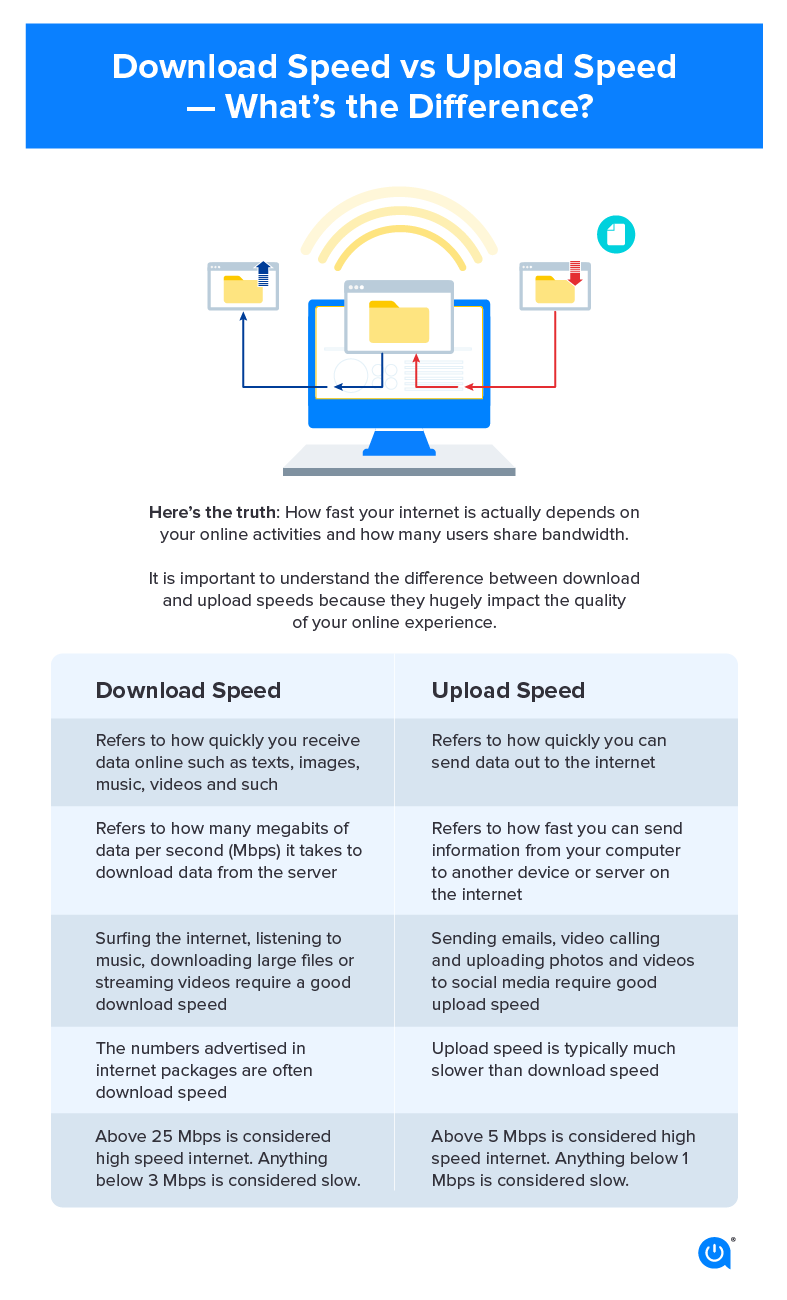
Download speeds vs. upload speeds
Download speed refers to how many megabits of data per second it takes to download data from a server in the form of images, videos, text, files and audio to your device. Activities such as listening to music on Spotify, downloading large files or streaming videos on Netflix all require you to download data.
Upload speed refers to how fast you can send information from your computer to another device or server on the internet. While downloading information is more common, some online activities need data to travel in the opposite direction. Sending emails, playing live tournament-style video games and video calling on Zoom require fast upload speeds for you to send data to someone else’s server.
Speed test results
We reviewed millions of MLab speed test results from the last six months to find that the average internet speed in the U.S. is 139 Mbps download with 41 Mbps upload.
What is a good download speed?
Speeds of at least 25 Mbps are considered good download speeds since they meet the Hulu, Netflix, Sling TV and other services, you should have a minimum download of 25 Mbps. If you have more than one person simultaneously streaming, 50 Mbps or more will be necessary.
Here are some speed points to remember when searching for an internet plan at your address:
- 100 to 300 Mbps: Best for single or small households
- 300 to 500 Mbps: Best for small to medium households
- 500 Mbps to 1 Gig: Best for large households with smart connections
What is a good upload speed?
Upload speeds of 3 Mbps are considered good because they meet the FCC’s minimum standard. If you or anyone in your household regularly uploads videos to YouTube or works from home, though, you may need a plan with higher upload speeds.
For example, if you have several devices in your household uploading at once, you should consider plans with 10 Mbps of upload speed or higher. Upload speed will determine how someone hears/sees you during video conferences, how fast it takes to upload your video to TikTok and more.
How internet speed works
Internet speeds are measured by how much data your internet connection can transfer per second, which is megabits of data per second (Mbps). The internet speeds you see in Mbps measure the rate at which a provider delivers internet data to and from your home (commonly referred to as download speed).
Data also goes in two directions — you download and upload information from the internet, so each internet connection will have download speeds and upload speeds.
What is internet bandwidth?
Bandwidth is kind of like a highway — the more lanes you have, the more room you give to traveling cars, which lets cars go faster and allows a higher volume of cars through to their destination.
Mbps is a good indicator of how much bandwidth your home Wi-Fi connection has. The more internet bandwidth you have, the higher your volume of data that can be downloaded at a reasonable pace. And you can increase the speed at which the data travels because more of it can flow. So, a household with a 500 Mbps internet plan has more bandwidth than a house with a 100 Mbps internet plan and can download more data faster.
So what kind of bandwidth do you need?
When you consider what internet speeds you need for various activities, you should take into account both download and upload speeds. Depending on what your favorite online activities are, one may be more important than the other.
Factors that affect internet speed
Internet service plan: Different internet plans offer varying speeds, and if you have a lower-tier plan – under 100 Mbps – your activities may be limited compared to higher-tier plans of 300 Mbps or more.
Connection type: Broadband connections such as fiber, fixed wireless, or cable internet generally offer faster speeds compared to dial-up or satellite internet connections.
Network traffic: Speeds may slow down due to increased demand. To take advantage of peak internet speed times, it’s good to know that Wednesday through Friday have the fastest download and upload speeds, with Sunday having the overal slowest.
Distance from towers: The physical distance between your address and the internet service provider’s (ISP) server’s towers or internet base can impact speed. If you are far away from the ISP’s server, it may take longer for data to travel back and forth, resulting in slower speeds.
Equipment and hardware: Outdated or low-quality equipment may limit the speed of your connection. Check your internet plan’s requirements before purchasing your own equipment.
Wi-Fi interference: Interference from nearby electronic devices, neighboring Wi-Fi networks, physical obstructions or even the distance between your device and the router can impact Wi-Fi performance.
Malware or viruses: Regularly scan your devices for malware and viruses because they can slow down your connection speeds.
Sharing bandwidth: Bandwidth-intensive activities such as streaming video or downloading large files on one device can impact the speeds experienced by other devices.
Internet providers’ download and upload speeds
Many internet providers offer internet plans with faster download speeds than upload. For instance, AT&T download and upload internet speeds can have as much as an 400 Mbps difference between upload vs. download speed.
Who has the fastest internet upload and download speeds
The internet provider you need depends heavily on your online activities and how many internet users you have at home.
As you think about what activities you use the internet for at home, you may decide that having fast upload speeds is more important than download speeds. You may find that you don’t really need fast upload speeds and just want fast download speeds that can handle streaming on multiple devices.
| Provider | Monthly price range* | Download speed range | Upload speed range |
|---|---|---|---|
| Verizon Fios | $49.99 – $89.99 | 300 – 940 Mbps | 300 – 880 Mbps |
| T-Mobile | $50.00/mo. | Up to 245 Mbps | Up to 31 Mbps |
| Xfinity | $9.95 – $299.95 | 50 – 6,000 Mbps | 10 – 6,000 Mbps |
| Spectrum | $49.99 – $89.99 | 300 – 1,000 Mbps** | 10 – 35 Mbps |
| Frontier Fiber | $49.99 – $154.99 | 500-5,000 Mbps | 500-5,000 Mbps |
| AT&T | $55.00 – $180.00 | 10 – 4,700 Mbps | 10- 4,700 Mbps |
| Cox | $49.99 – $149.99 | 100 – 2,000 Mbps | 5 – 35 Mbps |
| CenturyLink | $30.00 – $70.00 | 100 – 940 Mbps | 1 – 940 Mbps |
| Quantum Fiber | $49.00 – $65.00 | 200 – 940 Mbps | 200 – 940 Mbps |
| HughesNet | $49.99 – $174.99 | 15 – 50 Mbps | 1- 3 Mbps |
| Google Fiber | $70.00 – $100.00 | 1,000 – 2,000 Mbps | 1,000 – 2,000 Mbps |
| WOW! | $9.99 – $190.00 | 100 – 5,000 Mbps | 10 – 5,000 Mbps |
| Optimum | $40.00 – $180.00 | 300 – 5,000 Mbps | 20 – 5,000 Mbps |
| Mediacom | $19.99 – $59.99 | 100 – 1,000 Mbps | 5 – 50 Mbps |
| Astound | $19.99 – $54.99 | 110 – 1,200 Mbps | 2 – 20 Mbps |
| Kinetic by Windstream | $39.99 – $169.99 | 100 – 2,000 Mbps | 1 – 1,000 Mbps |
| Starry Internet | $50.00 – $80.00 | 200 – 1,000 Mbps | 200 Mbps |
| altafiber | $44.99 – $99.99 | 400 – 2,000 Mbps | 100 – 500 Mbps |
| Metronet | $29.95 – $59.95 | 100 – 1,000 Mbps | 100 – 1,000 Mbps |
| Ziply Fiber | $10.00 – $300.00 | 30 – 10,000 Mbps | 50 – 10,000 Mbps |
| Viasat | $64.99 – $169.99 | 12 – 100 Mbps | 3 Mbps |
Pricing per month plus taxes for length of contract. Additional fees and terms may apply. Pricing varies by location and availability. All prices subject to change at any time. May or may not be available based on service address. Speeds may vary. As of 06/20/23.
Download and upload speeds by internet connection type
Download and upload speed can vary based on your internet type, so we’ve provided a general range of speeds for fiber, cable, satellite and fixed wireless internet.
| Connection type | Download speed range | Upload speed range |
|---|---|---|
| Fiber | 30 – 6,000 Mbps | 30 – 6,000 Mbps |
| Cable | 25 – 1,000 Mbps | 10 – 50 Mbps |
| Satellite | 15 – 350 Mbps | At least 3 Mbps |
| Fixed wireless | 20 – 300 Mbps | 10 – 50 Mbps |
Why internet upload speeds are slow and download speeds are fast
Most providers focus on download speed vs. upload speed because the majority of online activities need more download bandwidth than upload bandwidth. As you’ll see below, most common online activities rely heavily on fast download speeds.
Since other activities that call for uploading data still require information to travel in both directions, the average person consistently needs higher download speeds than upload.
However, fiber internet connections are a unique exception. Fiber internet providers frequently offer upload internet speeds that mirror download speeds.
Activities that rely on download speed
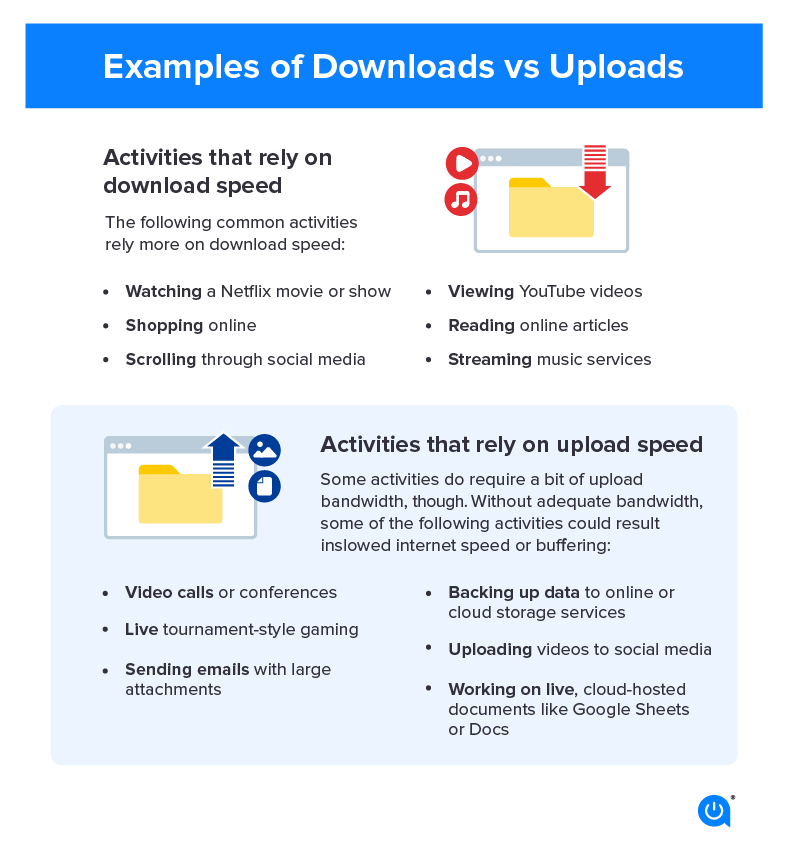
The following common activities rely more on download speeds:
- Watching a Netflix movie or show
- Shopping online
- Scrolling through social media
- Viewing YouTube videos
- Reading online articles
- Streaming music services
Activities that rely on upload speed
Some activities do require a bit of upload bandwidth, though. Without adequate bandwidth, some of the following activities could result in slowed internet speeds or buffering:
- Video calls or conferences
- Live tournament-style gaming
- Sending emails with large attachments
- Backing up data to online or cloud storage services
- Uploading videos to social media
- Working on live, cloud-hosted documents like Google Sheets or Docs
Use a speed test to check your download and upload speed
You can find out what your internet upload speed is and measure your download speed by using a free internet speed test. A speed test will measure both upload and download rates. We recommend testing internet speeds in multiple parts of your home to check consistency and see if you need to boost your Wi-Fi connection at home.
What does download and upload speed mean in a speed test? [SPOILER]
Well, it’s such a common question, especially after you’ve run an Internet speed test.
Apart from ping, download and upload are two other specifications of a speed test result, which help measure your network quality.
It’s a good way to check Internet performance and then figure out if its speed is good enough to support our online activities.
Do you want to learn more about these specs?
Right below here, MySpeed is going to explain to you basic things related to the test results.

What does download and upload speed mean?
Download and upload speed meaning
Here are some basic things to know about the meaning of upload and download speeds.
Further, you’ll know more about the strength and performance of an Internet connection.
Let’s take a look!
What is download speed?
Download speed shows how quickly you can pull or transmit data from a server on the Internet to the device using your Internet connection.
It’s measured in Mbps, which stands for megabits per second,
This metric determines how fast our devices can load a web page, stream video, or download files.
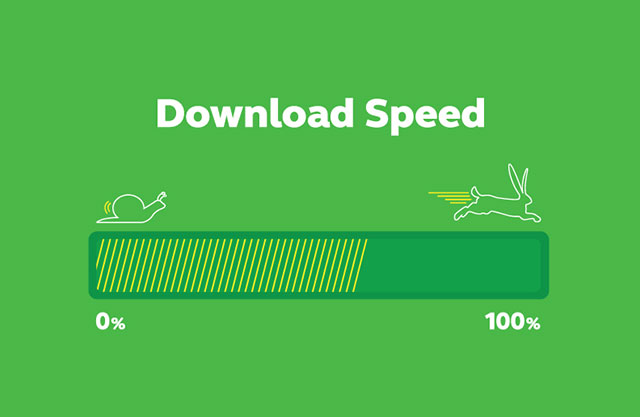
A slow Internet download speed means it takes more time for the device to receive digital information from the Internet.
So, the higher the download speeds, the better.
In other words, the more megabits per second (Mbps) you see in your download speed result, the stronger your Internet connections.
As a result, it will allow you to gain a more enjoyable Internet experience when streaming videos, TV, music, playing games, video conferencing, etc.
Well, speaking of online activities requiring good downloading speed and bandwidth, streaming is often mentioned first.
It seems like both of them are used, but download speed is always more important for streaming.
It’s worth noting that a good download speed is indispensable for enjoying streaming TV shows and movies.

The higher the Internet, the better
For sure, we don’t need an extremely high-speed Internet connection to have an enjoyable Internet experience.
However, without good enough Internet speed, it’s so hard for you to smoothly engage in online activities, especially when it comes to heavy activities.
What is upload speed?
Unlike download speed…
Upload speed is a measurement of how quickly your device can send data to the Internet.
This metric determines how fast you can send something via the Internet such as posting videos on Facebook, sending files via emails, or making video calls.
Upload speed is also measured in Mbps.
Of course, the more Mbps you see in your test result, the stronger your connection is.
Upload information and data
Fast speed for uploading data will give you more enjoyable experiences when using the Internet, especially when you need to send large files.
Also, a good upload speed lets you add videos to your Youtube channel or post images to social media in less time.
It also matters when you are making video calls or doing something like this.
If your Internet upload speeds are too slow, the quality of your video will likely be reduced which adds annoyance to your call.
How are upload and download speeds different?
Often, the download speeds are designed to be higher than the upload speed.
It’s because a large portion of online activities requires downloading rather than uploading data.
Due to that fact, Internet Service Providers (ISPs) often give priority to download speed.
If your test result shows a difference between download and upload speeds, it’s completely normal, so you don’t need to worry about that.
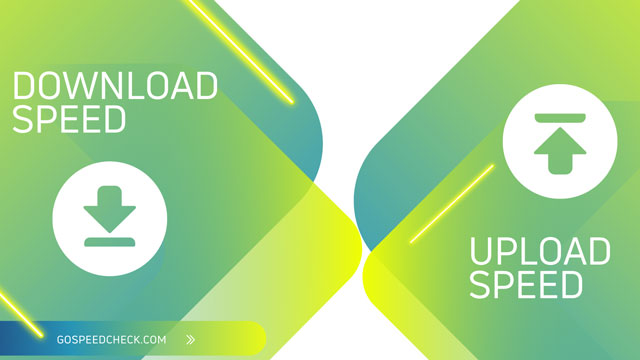
Download and upload speeds may not be the same
What affects download and upload speed?
Understanding the meaning of upload and download speed, it’s time to see some potential factors affecting each speed.
What affects download speed?
Your download speed can be affected by two key factors.
First, it’s the size of the file you’re downloading.
Second, the speed of your Internet actually makes a difference.
For more details, look at the table below to know how long it will take to download CyberPunk 2077:
| Internet speed | File size | Download time |
|---|---|---|
| 3 Mbps | 70 GB | 2.5 days |
| 4 Mbps | 70 GB | 1 day and 16 hours |
| 100 Mbps | 70 GB | 1 hour and 40 minutes |
As you can see above, the Internet speed determines how long you’ll have to wait.
The speed is unaffected because the file size is the same.
The opposite is also true: even with a fast Internet connection, download speed can alter when a file’s size changes.
Just keep in mind that download speed is the time it takes to download a file, song, video, or everything else you can think of.
Now that you understand that, let’s talk about upload speed.
What affects upload speed?
Your Internet service provider (ISP) and your Internet capacity are the two main variables determining your upload speed.
What affects upload speed?
In reality, bandwidth refers to how much data can be transmitted simultaneously.
Consider how water would flow through a garden hose.
The easier it is for information to go from your computer to the Internet, the more bandwidth you have.
Your upload speed is affected by the general Internet speed that is within the control of your ISP.
Your data is transferred from your device to the network of your ISP.
Get in touch with your ISP and ask to talk with a representative if you’re experiencing upload speed issues and want to know why.
Mbps vs. Kbps vs. MBps?
When it comes to “what is download speed vs upload speed”, it’s worth knowing their measurement: Mbps!
However, many people still mistake it for MBps or Kbps.
In fact, Kbps, Mbps, and especially MBps look quite similar.
But only Kbps and Mbps are used to measure download speeds and upload speeds.
Here are the differences between Mbps, Kbps, and MBps.
Mbps — Megabits per second
As mentioned above, Mbps stands for megabits per second — a standard measure of Internet speed.
A megabit is 1,000,000 bits of information.
Bit, which can be either 0 or 1, is the basic measurement for a piece of computer data.
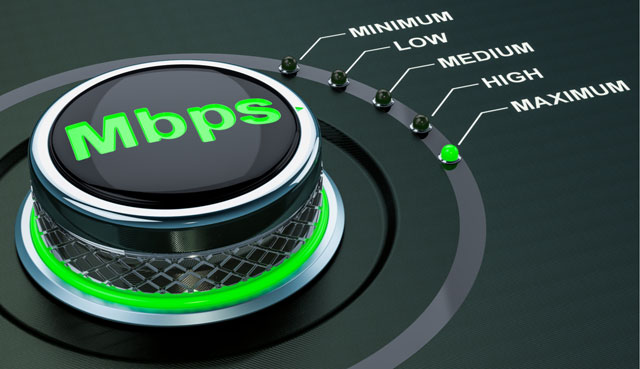
When it comes to the speed or how fast the data moves across the Internet, we use the units of Mbps (equal to 1 million bits per second) and Gbps (equal to 1 billion bits per second).
Kbps — Kilobits per second
About kilobits per second or kbps, it is 1000 bits of information.
Kbps is an older measure of Internet speed.
It is only used when needed to describe a slower connection.
One Mbps is 1000 times faster than one Kbps.
Kbps means kilobits per second
Mbps vs MBps
Don’t confuse Mbps with megabytes (MB).
MB is a measure of file size or capacity storage rather than Internet bandwidth.
An Mb (megabit) is smaller than an MB.
To avoid confusion, it’s worth noting that MBps (MB/s) isn’t used to denote Internet speed.
Mbps е MBps: В чем разница?
 Часто бывает трудно понять термины, используемые для интернет-метрик, а Mbps против. MBps.
В чем разница между Mbps и МБ?
- Mbps Это означает мегабит в секунду. MB используется применительно к скачать и загрузить скорости.
- необходимы 8 биты данных, чтобы соответствовать 1 байт.
Вы увидите эти термины, когда вы загружаете файл с данными Интернет или передачи от одного устройства к другому. Они показывают скорость передачи. Скорость соединения (Загрузка электронной загрузки) Похоже, мегабит в секунду, но вы скачиваете или передачи мегабайта.
Рассмотрим пример:
При загрузке или передать файл, обратите внимание, когда Mbps и MBps вступают в игру. Файл состоит из определенного количества мегабайт. Скажем, вы загружаете файл, который состоит из примерно 2 мегабайта. Вы будете нуждаться в скорости загрузки 8 мегабит в секунду для загрузки файла 2 секунд. Восемь содержат мегабит 1 мегабайт.
Для того, чтобы рассчитать, сколько времени потребуется, чтобы загрузить файл на разных скоростях, Вы можете использовать MB калькулятор Google Mb.
Когда вы покупаете услугу Интернета, сколько Mbps вы получаете с планом имеет решающее значение для выполнения. Чем больше Mbps, тем быстрее вы можете скачивать файлы.
Сколько времени требуется, чтобы загрузить различные мультимедийные файлы?
Время загрузки варьируется в зависимости от размера файла и его Mbps. Вы не всегда испытать
даже Mbps, потому что есть много факторов, которые влияют на скорость интернета – Именно поэтому большинство интернет-провайдеров рекламы
um “к” Mbps.Вот взгляд о распространенных типов медиа-файлов и их средних размеров, и как долго он будет принимать для загрузки
основанные на различных скоростях Интернета. Эти времена приблизительны, так как размеры файлов и скорость загрузки варьироваться.общие медиа-файлы Среднее время загрузки (s = 2-й, м = минуты, ч = Хорас) Тип файла Предполагаемый размер файла .5 Mbps 3 Mbps 6 Mbps 10 Mbps 18 Mbps 25 Mbps 35 Mbps 50 Mbps веб-страницы 1 мегабайт 16 s 3 s 1 s < 1 s < 1 s < 1 s < 1 s < 1 s Электронная книга 3 мегабайт 48 s 8 s 4 s 2.5 s 1.5 s 1 s < 1 s < 1 s mp3 музыка 5 мегабайт 80 s 13 s 7 s 4 s 2 s 1.5 s 1 s < 1 s видео 5 минут 20 мегабайт 5 м 53 s 27 s 16 s 9 s 6.5 s 5 s 3 s ТВ-шоу 1 время 1 гигабайт 4.5 час 44 м 22 м 14 м 7.5 м 5 м 4.5 м 2.5 м Фильмы SD 2 гигабайт 9 час 88 м 44 м 27 м 15 м 11 м 9 м 5 м 1080p Фильмы 12 гигабайт 53 час 9 час 4.5 час 2.5 час 1.5 час 1 час 46 м 32 м Как вы можете видеть, больше Mbps приводит к сокращению времени загрузки. следовательно, вы хотите, чтобы учитывать при выборе поставщика Mbps плана Интернета. При загрузке больших файлов, таких, как видео и фильмы, или много музыки и изображений одновременно, у вас есть лучший опыт работы с самыми высокими Mbps.
Что Mbps вы можете получить различные подключения к Интернету?
Тип сети может существенно влиять на скорость, что поставщик услуг Интернета может предложить. Волоконно-оптические сети, как правило, быстрее, чем кабель, и кабель, как правило, быстрее, чем спутник и DSL. Вот идея Mbps вы можете ожидать от каждого типа подключения к Интернету.
подключение к интернету Способ доставки скорость (Mbps) спутник спутниковый сигнал .5-2 DSL телефонные линии 3-9 накидка Медные жилы 20-38 волокно световые импульсы через тонкие стеклянные нити 45+ Тип подключения к Интернету вы можете получить для вашего дома зависит от вашего местоположения. Использование волокна расширяется, чтобы охватить больше областей, но эта технология до сих пор ограничивается конкретными областями. Кабельные соединения более доступны, и DSL или спутниковые соединения доступны практически везде.
При принятии решения о ISP, рассмотреть вашу онлайн-активность и что вы планируете загрузить или скачать и выбрать план, который предлагает Mbps, который будет наилучшим образом удовлетворить ваши потребности. Теперь, когда вы знаете разницу между Mbps и МБ, вы лучше информированы, чтобы найти правильный план для вас!